Operations, IT, and incident-response teams orchestrating incidents, requests, and governance rituals
Keep every incident and request moving inside one execution workspace
Taqiro becomes your incident automation workspace so every automation run, owner, and audit note stays linked to the execution story, cutting manual follow-ups and proving execution automation ROI.
Ops teams owning incidents, requests, and governance rituals
Engineering ops, IT, and enablement groups that rely on operations workflow orchestration to keep work moving.
Core Problem
Automation accountability splinters across silos
Incident automation workspace signals are scattered between chat, tickets, and spreadsheets, so nobody can trace the execution story.
Why Taqiro
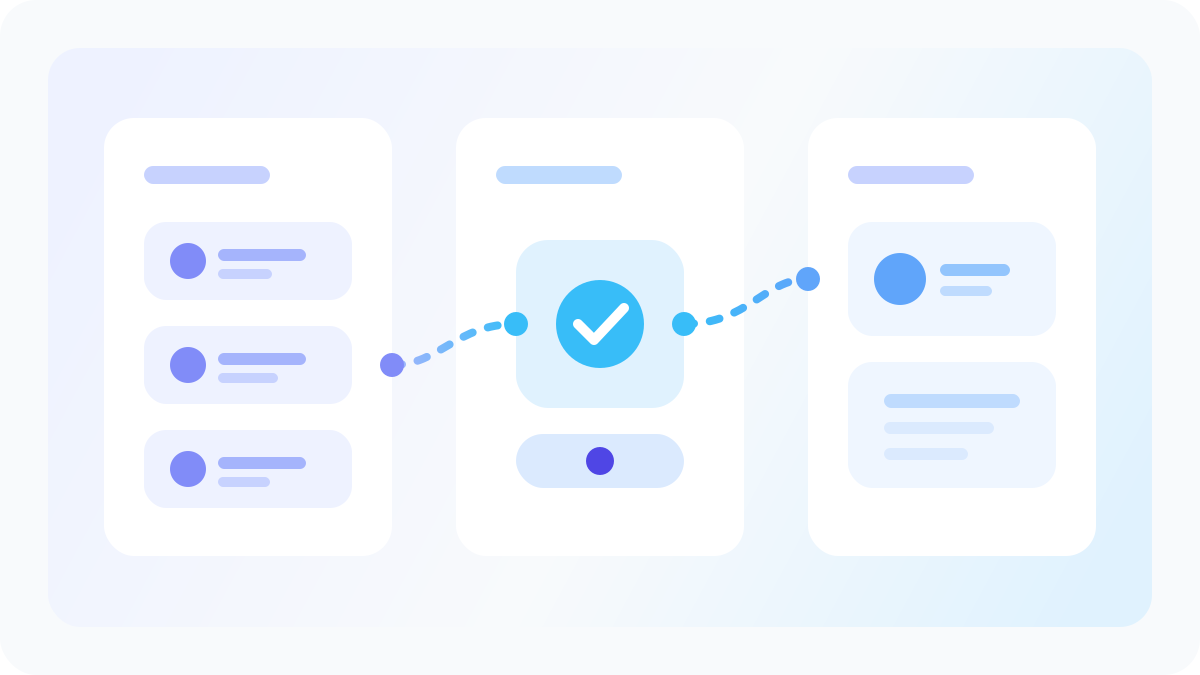
The Execution Circuit Map keeps automation, ownership, and visibility aligned
Templates tie automation runs, owners, and dashboards into one execution record so you can prove every handoff.
The challenge
Requests, incidents, and governance work stall between tools
Ops teams juggle incidents, approvals, and runbooks without consistent ownership, so automation context disappears the moment work leaves a ticketing system.
Manual follow-ups pile up, visibility gaps fuel escalations, and auditors demand a clean execution story.
Work spreads across tools
Requests jump between chat, ticketing, and spreadsheets with no single source of truth.
Follow-ups multiply
Teams chase status updates instead of solving the work.
Automation context is lost
Runs fire but downstream teams still wonder what happened.
Compliance lacks traceability
Auditors demand proof of every handoff and escalation history.
How Taqiro helps
Manage ops work with execution clarity
Taqiro connects incidents, requests, and governance rituals in one execution workspace so automation runs, owners, and dashboards stay synced.
Model the workflow
Define each stage with an owner, outcome, and automation rules so everyone knows what success looks like.
Track automation runs
The Automation Trace log records who triggered a run and what outcome it delivered.
Surface visibility
Dashboards highlight overdue stages, automation health, and follow-up volume.
Escalate with context
Notifications share the exact execution story so leadership can act fast.
Sample flow
A repeatable path from request to resolution
Automation runs, owners, and visibility stay connected so ops teams move faster through incidents and requests.
1. A request or incident triggers the execution workflow template.
2. Owners, automations, and expectations are defined for each stage.
3. Automations notify the next owner or escalate when a stage slips.
4. Resolution is logged with the automation run, visibility stream, and compliance notes.
Best-fit teams
Ops teams resolving incidents and change requests
IT and enablement teams orchestrating internal services
Operations groups enforcing governance rituals
Outcomes they want
Stop chasing manual follow-ups
Ensure automation accountability
Deliver audit-ready visibility
Why Taqiro
Execution-grade visibility for ops teams
Taqiro keeps automation, ownership, and audit evidence in one workspace so leaders trust what you deliver.
Questions ops teams ask before building this workflow
How does Taqiro connect automation runs to incident ownership?
Every automation run is recorded with its owner, trigger, and covered outcome so you can prove what moved the incident or request forward.
How do we keep recurring requests predictable?
Templates lock intake, stages, and automation reminders in place so every handoff stays visible and on schedule.
Can we show the execution story to auditors?
The Execution Circuit Map keeps automations, ownership, and visibility linked to each workflow so audits see the full story without digging through tools.